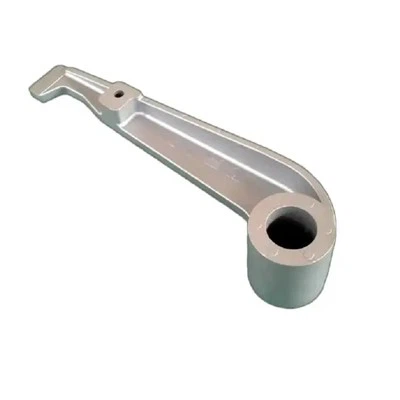
As a supplier of Powder Metallurgy Parts, I've witnessed firsthand the transformative power of optimizing the production process. It's not just about enhancing efficiency; it's about delivering high-quality products that meet and exceed our customers' expectations. In this blog, I'll share some insights and strategies on how to optimize the production process of powder metallurgy parts.
Raw Material Selection
The foundation of any successful powder metallurgy process lies in the selection of raw materials. High-quality powders are essential for achieving the desired properties in the final product. When choosing powders, consider factors such as particle size, shape, and composition. Fine powders generally offer better sinterability and can result in parts with higher density and strength. However, they may also be more expensive and require more precise handling.
For example, in the production of Shaft Parts, the choice of powder can significantly impact the part's mechanical properties. A powder with a narrow particle size distribution can ensure uniform packing during compaction, leading to a more consistent final product. Additionally, the composition of the powder should be carefully selected to meet the specific requirements of the application, such as corrosion resistance or high-temperature performance.
Compaction Process
The compaction process is a critical step in powder metallurgy, as it determines the initial shape and density of the part. To optimize this process, it's important to control factors such as pressure, temperature, and compaction speed. Higher pressures generally result in higher densities, but they can also increase the risk of tool wear and part defects. Therefore, it's essential to find the right balance between pressure and density.
One way to improve the compaction process is to use lubricants. Lubricants can reduce friction between the powder particles and the die walls, making it easier to achieve uniform compaction. They can also help prevent sticking and improve the release of the part from the die. However, it's important to choose the right lubricant for the specific powder and application, as different lubricants can have different effects on the final product.
Sintering Process
Sintering is the process of heating the compacted part to a high temperature to bond the powder particles together. This step is crucial for achieving the desired mechanical properties and density of the part. To optimize the sintering process, it's important to control factors such as temperature, time, and atmosphere.
The sintering temperature should be carefully selected based on the powder composition and the desired properties of the final product. Higher temperatures generally result in better bonding and higher densities, but they can also increase the risk of grain growth and distortion. Therefore, it's important to find the right balance between temperature and time to achieve the desired properties without compromising the part's dimensional accuracy.
The atmosphere during sintering can also have a significant impact on the final product. For example, a reducing atmosphere can help prevent oxidation and improve the bonding between the powder particles. On the other hand, an inert atmosphere can be used to prevent reactions with the surrounding environment.
Secondary Operations
In some cases, secondary operations may be required to achieve the desired final properties of the powder metallurgy part. These operations can include machining, heat treatment, and surface finishing.
Machining can be used to improve the dimensional accuracy and surface finish of the part. However, it's important to choose the right machining parameters to avoid damaging the part. Heat treatment can be used to improve the mechanical properties of the part, such as hardness and strength. Surface finishing can be used to improve the appearance and corrosion resistance of the part.
Quality Control
Quality control is an essential part of the powder metallurgy production process. It's important to monitor and control the process at every stage to ensure that the final product meets the desired specifications. This can include inspecting the raw materials, monitoring the compaction and sintering processes, and testing the final product.
One way to ensure quality control is to use statistical process control (SPC) techniques. SPC can help identify trends and variations in the production process, allowing for timely adjustments to be made to ensure consistent quality. Additionally, it's important to have a well-defined quality management system in place to ensure that all products are manufactured to the highest standards.
Continuous Improvement
Optimizing the production process of powder metallurgy parts is an ongoing process. It's important to continuously evaluate and improve the process to increase efficiency, reduce costs, and improve the quality of the final product. This can involve implementing new technologies, improving process control, and training employees.
For example, the use of advanced manufacturing technologies such as 3D printing can help reduce lead times and improve the design flexibility of powder metallurgy parts. Additionally, implementing lean manufacturing principles can help eliminate waste and improve the overall efficiency of the production process.
Conclusion
Optimizing the production process of powder metallurgy parts requires a comprehensive approach that includes raw material selection, compaction, sintering, secondary operations, quality control, and continuous improvement. By following these strategies, we can produce high-quality powder metallurgy parts that meet and exceed our customers' expectations.


If you're interested in learning more about our Powder Metallurgy Parts or have any questions about our production process, please don't hesitate to contact us. We're always happy to discuss your specific requirements and provide you with a customized solution.
References
- German, R. M. (1994). Powder Metallurgy Science. Metal Powder Industries Federation.
- Schaffer, G. B., & Heaney, P. J. (2003). Powder Metallurgy: Principles and Applications. ASM International.
- Upadhyaya, G. S. (2010). Powder Metallurgy Technology: Principles and Applications. CRC Press.