As a supplier of Powder Metallurgy Parts, I've witnessed firsthand the remarkable versatility and efficiency of this manufacturing process. Powder metallurgy offers a cost - effective and precise way to produce complex parts with high material utilization. However, one aspect that requires careful consideration is the brittleness of powder metallurgy parts.
Understanding Brittleness in Materials
Brittleness is a material property that describes a material's tendency to fracture without significant plastic deformation. In other words, brittle materials break suddenly when subjected to stress, rather than deforming gradually. This is in contrast to ductile materials, which can stretch and bend under stress before failing.
The brittleness of a material is influenced by several factors, including its crystal structure, the presence of impurities, and the manufacturing process. For powder metallurgy parts, the brittleness is closely related to the way the powder particles are compacted, sintered, and the subsequent heat treatment processes.

Factors Affecting the Brittleness of Powder Metallurgy Parts
Powder Characteristics
The type and quality of the powder used in powder metallurgy play a crucial role in determining the brittleness of the final part. Different metal powders have different inherent properties. For example, some powders may have a more brittle crystal structure. Additionally, the particle size and shape of the powder can also affect the brittleness. Fine powders tend to have a larger surface area, which can lead to more rapid sintering but may also increase the likelihood of porosity and brittleness if not properly controlled.
Compaction Process
The compaction process is where the powder is pressed into the desired shape. The pressure applied during compaction affects the density and uniformity of the green (unsintered) part. If the compaction pressure is too low, the part may have low density and high porosity, which can make it brittle. On the other hand, if the pressure is too high, it can cause cracks in the green part, also leading to brittleness in the final sintered part.
Sintering Process
Sintering is the process of heating the compacted powder to a temperature below its melting point to bond the particles together. The sintering temperature, time, and atmosphere all have a significant impact on the brittleness of the part. If the sintering temperature is too low or the time is too short, the particles may not bond fully, resulting in a weak and brittle structure. Conversely, over - sintering can cause grain growth, which can also reduce the ductility of the material and increase brittleness.
Heat Treatment
Heat treatment is often used to improve the mechanical properties of powder metallurgy parts. However, improper heat treatment can lead to brittleness. For example, rapid cooling during quenching can create internal stresses in the part, which may cause cracking and increase brittleness. Tempering, which is usually done after quenching, is used to relieve these stresses and improve ductility. If the tempering process is not carried out correctly, the part may remain brittle.
Consequences of Brittleness in Powder Metallurgy Parts
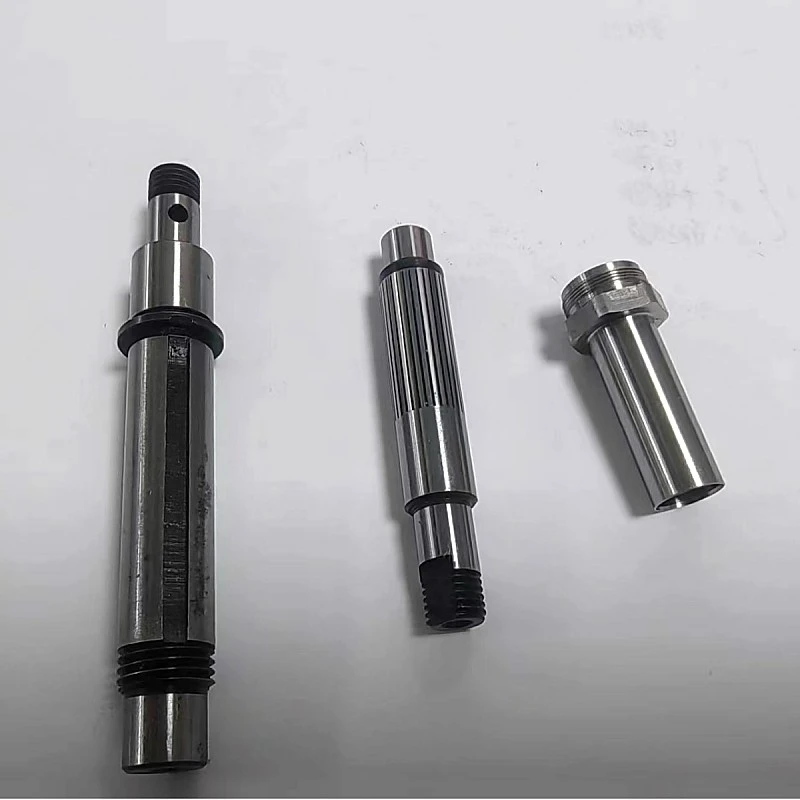
The brittleness of powder metallurgy parts can have several negative consequences. In applications where the parts are subjected to impact or dynamic loading, brittle parts are more likely to fail suddenly, which can lead to equipment breakdown and safety hazards. For example, in automotive or aerospace applications, a brittle shaft part Shaft Parts may break under high - speed rotation or sudden changes in load, causing serious damage to the vehicle or aircraft.
In addition, brittle parts are more difficult to machine and assemble. During machining operations such as drilling or milling, brittle parts are more prone to chipping and cracking, which can reduce the dimensional accuracy of the part and increase the scrap rate. In assembly, the risk of breakage during handling and fitting can also be higher for brittle parts.
Strategies to Reduce Brittleness
As a supplier, we have developed several strategies to reduce the brittleness of our powder metallurgy parts.
Powder Selection and Preparation
We carefully select high - quality powders with appropriate particle size and shape distributions. We also perform pre - treatment processes on the powders, such as blending and coating, to improve their flowability and sinterability. This helps to ensure a more uniform and dense part during compaction and sintering.
Optimized Compaction and Sintering Parameters
We use advanced compaction equipment to precisely control the compaction pressure and ensure uniform density throughout the part. In the sintering process, we closely monitor and adjust the temperature, time, and atmosphere to achieve the optimal bonding between particles without excessive grain growth.
Proper Heat Treatment
Our heat treatment processes are carefully designed and controlled. We use computer - controlled furnaces to ensure accurate temperature and cooling rate control during quenching and tempering. This helps to relieve internal stresses and improve the ductility of the parts.
Case Studies
Let's take a look at a few case studies to illustrate the importance of addressing brittleness in powder metallurgy parts.
Case 1: Prototype Aluminum Casting
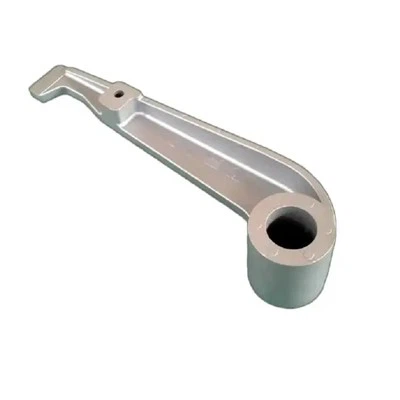
A customer came to us with a requirement for Prototype Aluminum Casting. The initial prototypes were found to be too brittle, which was unacceptable for their application. Through a detailed analysis of the powder characteristics, compaction, and sintering processes, we identified that the sintering temperature was slightly too high, causing excessive grain growth. We adjusted the sintering parameters and performed a more optimized heat treatment. The revised prototypes showed significantly improved ductility and met the customer's requirements.
Case 2: Shaft Parts
In another project involving Shaft Parts, the parts were failing under dynamic loading due to brittleness. We found that the compaction pressure was uneven, resulting in non - uniform density in the parts. By improving the compaction tooling and process control, we were able to achieve a more consistent density, which reduced the brittleness and improved the performance of the shaft parts.
Conclusion
The brittleness of powder metallurgy parts is a complex issue that is influenced by multiple factors in the manufacturing process. As a supplier of Powder Metallurgy Parts, we are committed to understanding these factors and implementing effective strategies to reduce brittleness. By carefully controlling powder selection, compaction, sintering, and heat treatment processes, we can produce high - quality powder metallurgy parts with improved ductility and reliability.
If you are in need of powder metallurgy parts and are concerned about brittleness or other quality issues, we invite you to contact us for a detailed discussion. Our team of experts is ready to work with you to develop customized solutions that meet your specific requirements.
References
- German, R. M. (2005). Powder Metallurgy Science. Metal Powder Industries Federation.
- Schaffer, G. B., & Ness, K. (2012). Sintering Theory and Practice. Wiley.
- ASM Handbook Committee. (2008). ASM Handbook Volume 7: Powder Metallurgy. ASM International.