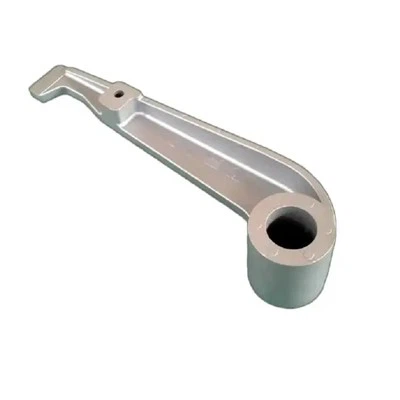
Hey there! As a supplier in the CNC turning arena, I often get asked this question: “Can CNC turning produce complex shapes?” Well, let's dive right into it and explore what this amazing technology is all about and how it fares when it comes to creating those intricate designs.
First off, let's quickly cover what CNC turning is. CNC, which stands for Computer Numerical Control, is a technology that uses computer programs to control machine tools. In the case of CNC turning, a piece of material is rotated while a cutting tool moves along different axes to remove material and shape the workpiece. It's like a super - precise, automated lathe operation.
Now, when we talk about complex shapes, we're referring to parts with non - standard geometries, multiple curves, undercuts, and detailed features. And the short answer is yes, CNC turning can absolutely produce complex shapes. But there are some factors to consider.
One of the key advantages of CNC turning in creating complex shapes is its high precision. The computer - controlled nature of the process allows for extremely accurate cuts. The cutting tool can be programmed to move in very small increments, which means it can create fine details and smooth curves. For example, if you need a part with a series of small, precisely spaced holes or a part with a gently sloping contour, CNC turning can handle it with ease.
Another benefit is the repeatability. Once a program is set up for a particular complex shape, the CNC machine can produce the same part over and over again with minimal variation. This is crucial for manufacturing industries where consistency is key. Whether you're making a batch of 10 or 10,000 parts, the quality and shape of each piece will be nearly identical.
However, there are limitations. The nature of the turning process means that the part being machined rotates around an axis. This restricts the types of shapes that can be created to some extent. Shapes that are symmetrical around an axis are much easier to produce using CNC turning. For instance, cylindrical parts, tapered shafts, and parts with concentric features are well - suited for this process.
But what about non - axisymmetric shapes? Well, that's where things can get a bit more challenging. While CNC turning machines have become more advanced over the years, creating truly non - axisymmetric complex shapes is often better left to other machining processes like CNC milling. Milling machines can move the cutting tool in multiple directions and can access different sides of the workpiece more easily, which is great for creating irregular shapes.
Despite these limitations, there are ways to push the boundaries of what CNC turning can do for complex shapes. For example, multi - axis CNC turning machines have been developed. These machines can move the cutting tool in more than just the traditional two or three axes. With a 5 - axis CNC turning center, the cutting tool can approach the workpiece from different angles, allowing for the creation of more complex geometries that were previously difficult or impossible to achieve.
Let's take a look at some real - world examples of complex shapes that can be produced using CNC turning.
Powder Metallurgy Parts
Powder metallurgy parts often require precise shaping, and CNC turning can play a big role in their production. These parts can have complex internal and external features. For more information on powder metallurgy parts produced through CNC turning, check out Powder Metallurgy Parts.
Precision Bushing
Precision bushings are another great example. They need to have very accurate dimensions and smooth surfaces. CNC turning can create bushings with complex inner and outer contours, ensuring a perfect fit in their intended applications. You can find more about precision bushings on our website: Precision Bushing.


Shaft Parts
Shaft parts are commonly produced using CNC turning. They can have various diameters, tapers, and keyways. Some shafts may require complex profiles to transmit torque or fit into specific machinery. To learn more about shaft parts made with CNC turning, visit Shaft Parts.
In addition to the machine capabilities, the choice of material also affects the ability to produce complex shapes. Softer materials like aluminum and brass are generally easier to machine into complex shapes compared to harder materials like stainless steel or titanium. Harder materials require more powerful cutting tools and slower machining speeds, which can increase the production time and cost.
The programming of the CNC machine is also a critical factor. Creating a program for a complex shape requires a skilled programmer who understands both the machining process and the design requirements. The programmer needs to account for things like tool paths, cutting speeds, and feed rates to ensure that the final part meets the specifications.
So, in conclusion, while CNC turning has its limitations when it comes to creating complex shapes, it is still a very powerful and versatile machining process. With the right equipment, programming, and choice of material, it can produce a wide range of intricate parts. Whether you need parts for aerospace, automotive, or general machinery applications, CNC turning can be a reliable solution for many complex shape requirements.
If you're in the market for CNC - turned parts with complex shapes, we're here to help. We have the expertise and the equipment to turn your design concepts into reality. Whether your project is big or small, we'd love to discuss your needs and see how we can assist you in getting the high - quality parts you require. Don't hesitate to reach out and start a conversation about your procurement needs. We're ready to work with you to find the best solutions for your manufacturing challenges.
References
- “Modern Manufacturing Technology Handbook”
- Journals on Computer - Aided Machining and Manufacturing
- Research papers on Advanced CNC Machining Processes