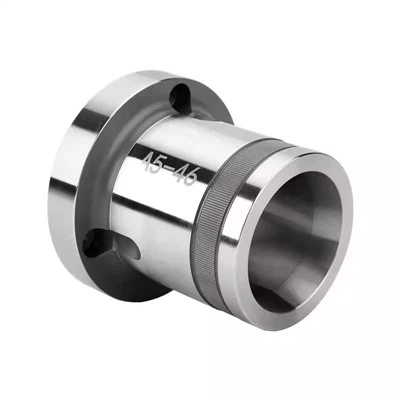
Hey there! As a supplier of CNC Lathe Pull-out Spindle Head, I've seen firsthand how the feed rate can have a huge impact on the performance of these spindle heads. In this blog, I'm gonna break down what feed rate is, how it affects the operation of a CNC lathe pull-out spindle head, and why it's so important for you to understand.
Let's start with the basics. The feed rate in a CNC lathe is the speed at which the cutting tool moves along the workpiece. It's usually measured in inches per revolution (IPR) or millimeters per revolution (mm/r). This rate determines how fast material is removed from the workpiece and how the final surface finish will turn out.
When it comes to a CNC Lathe Pull-out Spindle Head, the feed rate plays a crucial role in several aspects of its performance. First off, it affects the cutting force. A higher feed rate means more material is being removed per revolution, which in turn increases the cutting force. If the feed rate is too high, the cutting tool might experience excessive wear and tear, or even break. On the other hand, if the feed rate is too low, the machining process will take longer, and you might not get the desired efficiency.
Another important aspect is the surface finish. A lower feed rate generally results in a smoother surface finish because the cutting tool takes smaller bites out of the material. This is great for applications where a high-quality finish is required, like in precision machining. However, if you're more concerned about speed and productivity, a higher feed rate might be more suitable, even if it means sacrificing a bit of surface quality.
The feed rate also impacts the chip formation. At a higher feed rate, the chips tend to be thicker and larger. This can be a problem if the chips aren't properly evacuated from the cutting area. If the chips get stuck, they can cause damage to the cutting tool and the workpiece. So, it's important to have a good chip evacuation system in place when using a high feed rate.
Now, let's talk about how to choose the right feed rate for your CNC Lathe Pull-out Spindle Head. There are several factors to consider. The type of material you're machining is a big one. Different materials have different properties, and they require different feed rates. For example, softer materials like aluminum can usually handle higher feed rates compared to harder materials like steel.
The type of cutting tool you're using also matters. Some cutting tools are designed to work better at higher feed rates, while others are more suitable for lower rates. You need to make sure you're using the right tool for the job and adjusting the feed rate accordingly.
The spindle speed is another factor. The feed rate and the spindle speed are closely related. You need to find the right balance between the two to achieve the best results. A general rule of thumb is to increase the feed rate as the spindle speed increases, but you also need to be careful not to overload the cutting tool.
As a supplier, I've seen many customers struggle with finding the right feed rate. That's why we offer support and advice to help you optimize your machining process. We understand that every application is different, and we're here to help you get the most out of your CNC Lathe Pull-out Spindle Head.
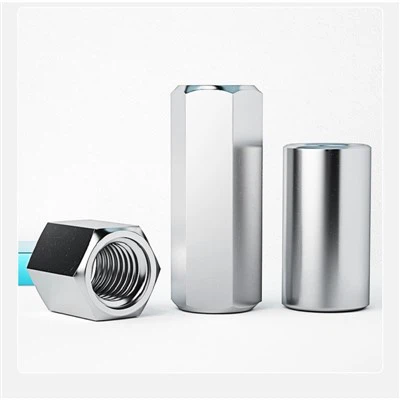
In addition to the feed rate, there are other components that can work in conjunction with the CNC Lathe Pull-out Spindle Head to improve the overall performance. For example, Hexagonal Metal Lock Nuts can help secure the spindle head and prevent any unwanted movement during the machining process. These nuts are designed to provide a reliable and tight connection, ensuring the stability of the spindle head.
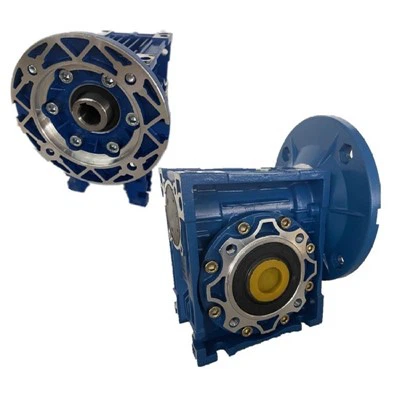
Another useful component is the Small Aluminum Gearbox. This gearbox can be used to control the speed and torque of the spindle head, allowing for more precise and efficient machining. It can also help reduce the wear and tear on the spindle head, extending its lifespan.
If you're in the market for a CNC Lathe Pull-out Spindle Head or any of the related components, we'd love to hear from you. Our team of experts is ready to assist you in finding the right products for your needs. Whether you're a small workshop or a large manufacturing facility, we have the solutions to help you improve your machining process.
In conclusion, the feed rate is a critical factor in the performance of a CNC Lathe Pull-out Spindle Head. By understanding how it affects the cutting force, surface finish, and chip formation, you can make informed decisions about the feed rate and other machining parameters. And with the right components like Hexagonal Metal Lock Nuts and Small Aluminum Gearbox, you can further enhance the performance of your CNC lathe. So, if you have any questions or need help with your machining setup, don't hesitate to reach out. We're here to make your machining process as efficient and productive as possible.


References:
- Smith, J. (2020). CNC Machining Handbook. Publisher X.
- Johnson, A. (2019). Advanced CNC Lathe Operations. Publisher Y.