As a seasoned supplier of cast iron parts, I've been deeply involved in the manufacturing process for years. One of the most critical aspects that often gets overlooked but significantly impacts the quality of cast iron parts is the pouring speed. In this blog, I'll delve into the requirements for the pouring speed of cast iron parts, sharing insights based on my practical experience and industry knowledge.
Understanding the Basics of Cast Iron Pouring
Before we discuss the requirements for pouring speed, it's essential to understand the basic process of casting iron. Casting is a manufacturing process in which molten metal is poured into a mold cavity and allowed to solidify, taking the shape of the mold. Cast iron, a group of iron - carbon alloys with a carbon content greater than 2%, is widely used in various industries due to its excellent castability, wear resistance, and cost - effectiveness.
The pouring speed refers to the rate at which molten cast iron is introduced into the mold. It is a crucial parameter that affects the filling pattern, solidification process, and ultimately the quality of the final cast iron part.
Factors Affecting the Pouring Speed Requirements
Part Geometry
The shape and size of the cast iron part play a significant role in determining the appropriate pouring speed. For complex - shaped parts with thin walls and intricate details, a relatively high pouring speed may be required. This is because a faster pouring speed ensures that the molten metal can quickly fill all the nooks and crannies of the mold before it starts to solidify. For example, a part with many thin fins or small cavities needs a rapid influx of molten iron to avoid incomplete filling, which could lead to defects like porosity or cold shuts.
On the other hand, large and thick - walled parts may require a slower pouring speed. A slow pour allows the heat in the molten metal to be evenly distributed within the mold cavity. If the pouring speed is too fast, the outer layers of the thick part may solidify prematurely, trapping gases and causing internal stresses, which can lead to cracking or other structural defects in the finished product.
Mold Material
Different mold materials have different heat - transfer properties, which in turn affect the pouring speed requirements. Sand molds, for instance, are relatively porous and have good heat - insulating properties. They can absorb heat from the molten metal at a slower rate. As a result, a moderate pouring speed is usually sufficient for sand - cast parts. The slower heat transfer allows the molten metal more time to flow and fill the mold.
In contrast, metal molds, such as those made of steel or aluminum, have high thermal conductivity. They dissipate heat from the molten metal rapidly. For parts cast in metal molds, a faster pouring speed may be necessary to ensure that the mold is completely filled before the metal solidifies.
Cast Iron Composition
The composition of the cast iron also influences the pouring speed. Different types of cast iron, such as gray cast iron, white cast iron, and ductile cast iron, have different melting points, viscosities, and solidification characteristics. For example, gray cast iron has a relatively low melting point and good fluidity. It can be poured at a slightly faster speed compared to white cast iron, which has a higher carbon content and is more brittle.
Ductile cast iron, which contains small amounts of magnesium or other nodulizing agents to make the graphite in the iron take on a nodular shape, also has unique pouring requirements. Its pouring speed should be carefully controlled to maintain the proper graphite nodule formation and to ensure good mechanical properties of the final part.
The Impact of Incorrect Pouring Speed
Too Fast Pouring Speed
When the pouring speed is too high, it can cause several problems. Firstly, it can lead to turbulence in the molten metal as it enters the mold. Turbulence can entrain air and oxides into the metal, resulting in porosity and inclusions in the cast part. These defects can significantly reduce the mechanical strength and durability of the part.
Secondly, a high pouring speed can cause splashing of the molten metal. This not only poses a safety hazard but can also lead to uneven filling of the mold and the formation of rough surfaces on the cast part. Additionally, the rapid influx of molten metal can exert excessive pressure on the mold, potentially damaging the mold and leading to dimensional inaccuracies in the final product.

Too Slow Pouring Speed
A slow pouring speed can result in incomplete filling of the mold. As the molten metal takes too long to reach all parts of the mold, it may start to solidify before completely filling the cavity. This leads to defects such as short - shots or cold shuts, where there are gaps or discontinuities in the cast part.
Furthermore, a slow pour can cause the temperature of the molten metal to drop significantly, increasing its viscosity. The more viscous metal may not flow smoothly through the mold, resulting in poor surface finish and internal defects due to improper filling and solidification.
Optimal Pouring Speed Determination
Determining the optimal pouring speed for a specific cast iron part requires a combination of theoretical knowledge and practical experience. Engineers and foundry workers often rely on empirical data, computer simulations, and trial - and - error methods.
Computer - aided design (CAD) and simulation software can be used to model the casting process and predict the behavior of the molten metal at different pouring speeds. These simulations take into account factors such as part geometry, mold material, and cast iron composition to recommend an appropriate pouring speed range.
However, in real - world scenarios, adjustments are often made based on the actual casting results. For example, if a part shows signs of incomplete filling during the initial trials, the pouring speed may be increased slightly. Conversely, if porosity or other defects related to turbulence are observed, the speed may be reduced.
Related Products and Their Pouring Considerations
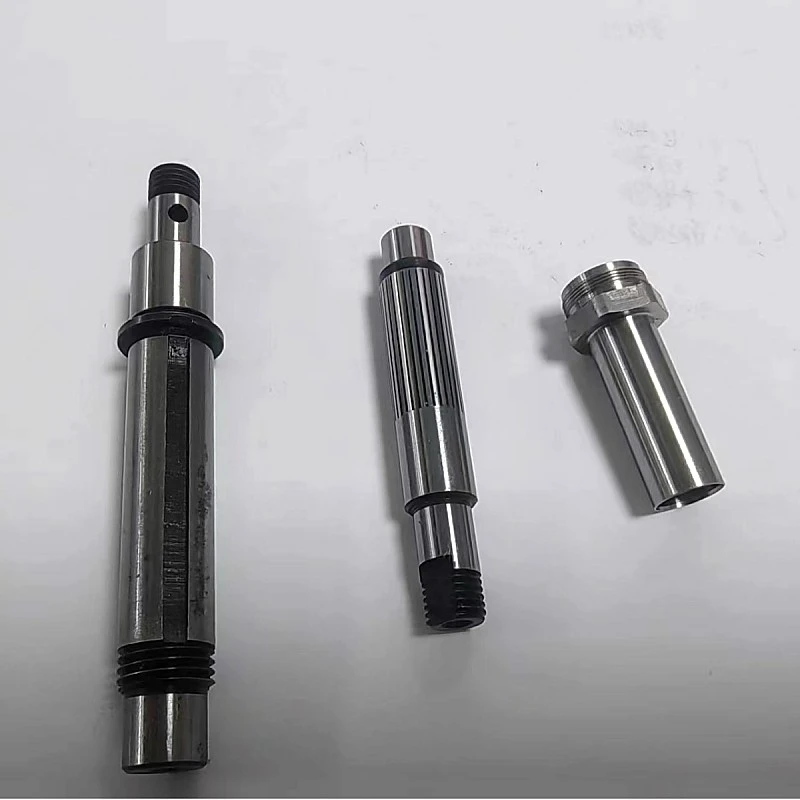
As a supplier of cast iron parts, I also deal with a variety of related products. For example, Shaft Parts often require precise pouring to ensure a uniform structure and good surface finish. The pouring speed for shaft parts should be adjusted according to their diameter, length, and any additional features. A slower speed may be needed for larger - diameter shafts to prevent internal defects, while smaller - diameter shafts may be poured at a relatively faster rate.
Prototype Aluminum Casting also has its own set of pouring requirements. Although aluminum has different properties compared to cast iron, the principle of controlling the pouring speed to ensure proper filling and solidification remains the same. Aluminum has a lower melting point and higher fluidity than cast iron, so the pouring speed may need to be carefully calibrated to avoid over - filling or splashing.
Liner Bushing is another product that requires attention to pouring speed. These parts often have thin walls and precise dimensions. A high - quality liner bushing depends on a well - controlled pouring process to ensure that the molten metal fills the mold evenly and solidifies without defects.
Conclusion
In conclusion, the pouring speed of cast iron parts is a critical factor that directly impacts the quality of the final product. It is influenced by multiple factors, including part geometry, mold material, and cast iron composition. Incorrect pouring speed can lead to a variety of defects, such as porosity, incomplete filling, and dimensional inaccuracies.
As a reliable supplier of cast iron parts, we have the expertise and experience to ensure that the pouring speed is carefully optimized for each part we produce. Whether you need Shaft Parts, Prototype Aluminum Casting, or Liner Bushing, we are committed to delivering high - quality products. If you are interested in our cast iron parts or have specific requirements, please feel free to contact us for a detailed discussion about your procurement needs.
References
- Campbell, J. (2003). Casting. Butterworth - Heinemann.
- Davis, J. R. (Ed.). (1996). Cast Irons. ASM International.
- Kalpakjian, S., & Schmid, S. R. (2008). Manufacturing Engineering and Technology. Pearson Prentice Hall.