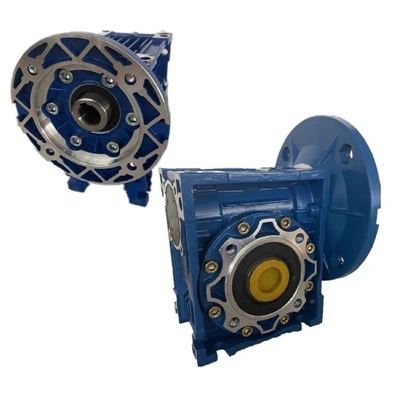
Hey there, folks! As a supplier of Small Aluminum Gearboxes, I often get asked about the efficiency curve of these nifty little devices. So, I thought I'd take a few minutes to break it down for you and give you a better understanding of what's going on under the hood, so to speak.
First off, let's talk about what efficiency means in the context of a gearbox. In simple terms, efficiency is a measure of how well a gearbox converts input power into output power. No gearbox is 100% efficient – there's always some energy lost along the way, usually in the form of heat, noise, and friction. The efficiency curve of a gearbox shows how this efficiency changes as a function of various operating conditions, like load, speed, and temperature.
Understanding the Basics of the Efficiency Curve
The efficiency curve of a small aluminum gearbox typically has a characteristic shape. At low loads and speeds, the efficiency is relatively low. This is because the internal components of the gearbox, like the gears, bearings, and seals, have to overcome a certain amount of friction just to start moving. As the load and speed increase, the efficiency also increases, reaching a peak at a certain operating point. This is the sweet spot where the gearbox is operating most efficiently, with the least amount of energy loss.
After the peak, the efficiency starts to decline again. This is because as the load and speed continue to increase, the internal components of the gearbox start to experience more stress and wear. The increased friction and heat generated can cause the efficiency to drop off rapidly. So, it's important to operate the gearbox within its recommended load and speed limits to ensure optimal efficiency.
Factors Affecting the Efficiency Curve
There are several factors that can affect the efficiency curve of a small aluminum gearbox. Let's take a closer look at some of the most important ones:


1. Gear Design and Quality
The design and quality of the gears themselves play a big role in determining the efficiency of the gearbox. High - quality gears with precise tooth profiles and smooth surfaces will have less friction and wear, resulting in higher efficiency. For example, helical gears are generally more efficient than spur gears because they have a larger contact area and a smoother meshing action.
2. Lubrication
Proper lubrication is essential for maintaining the efficiency of a gearbox. Lubricants reduce friction between the moving parts, which in turn reduces heat generation and wear. The type and quality of the lubricant, as well as the lubrication method (e.g., splash lubrication or forced - feed lubrication), can all affect the efficiency curve.
3. Load and Speed
As mentioned earlier, the load and speed at which the gearbox operates have a significant impact on its efficiency. Operating the gearbox at or near its peak efficiency point will result in the best performance. However, it's important to note that the peak efficiency point may vary depending on the specific design and application of the gearbox.
4. Temperature
Temperature can also have a big effect on the efficiency of a gearbox. As the temperature increases, the viscosity of the lubricant decreases, which can lead to increased friction and wear. Additionally, high temperatures can cause the materials in the gearbox to expand, which can affect the clearances between the moving parts and reduce efficiency.
Why the Efficiency Curve Matters
Understanding the efficiency curve of a small aluminum gearbox is crucial for several reasons. For one, it can help you choose the right gearbox for your application. By knowing the operating conditions of your system (load, speed, etc.), you can select a gearbox that will operate at or near its peak efficiency point, which will result in lower energy consumption and longer service life.
Secondly, monitoring the efficiency curve over time can be a useful tool for detecting potential problems with the gearbox. A sudden drop in efficiency could indicate issues such as worn gears, improper lubrication, or misalignment. Catching these problems early can help prevent costly breakdowns and repairs.
Our Small Aluminum Gearboxes
At our company, we take great pride in offering high - quality Small Aluminum Gearboxes. We've spent a lot of time and effort optimizing the design and manufacturing process to ensure that our gearboxes have excellent efficiency curves. Our gearboxes are designed to operate efficiently over a wide range of loads and speeds, making them suitable for a variety of applications.
If you're in the market for a Small Aluminum Gearbox, you'll be happy to know that our products are made from high - grade aluminum, which offers a great combination of strength and light weight. This not only makes the gearboxes easy to install and handle but also helps to reduce the overall weight of your system, which can be a big advantage in many applications.
We also offer a range of accessories and options to customize our gearboxes to your specific needs. For example, we have Turnbuckle Fasteners that can be used for easy installation and adjustment, and CNC Lathe Pull - out Spindle Head for more precise machining operations.
Let's Talk Business!
If you're interested in learning more about our Small Aluminum Gearboxes or have any questions about the efficiency curve or how it might apply to your specific application, don't hesitate to reach out. We're here to help you find the best solution for your needs. Whether you're a small business owner looking for a reliable gearbox for your manufacturing process or an engineer working on a new product design, we've got you covered.
Contact us today and let's start a conversation about how our Small Aluminum Gearboxes can improve the performance and efficiency of your system. We're confident that once you see the quality and performance of our products, you'll be glad you made the choice to work with us.
References
- "Gearbox Design Handbook" by Heinz P. Bloch and Fred K. Geitner
- "Mechanical Engineering Design" by Joseph Edward Shigley, Charles R. Mischke, and Thomas H. Brown
- "Fundamentals of Machine Component Design" by Robert C. Juvinall and Kurt M. Marshek